Biography
About the Artist
Biography
Over 45 Years of Artistic Excellence
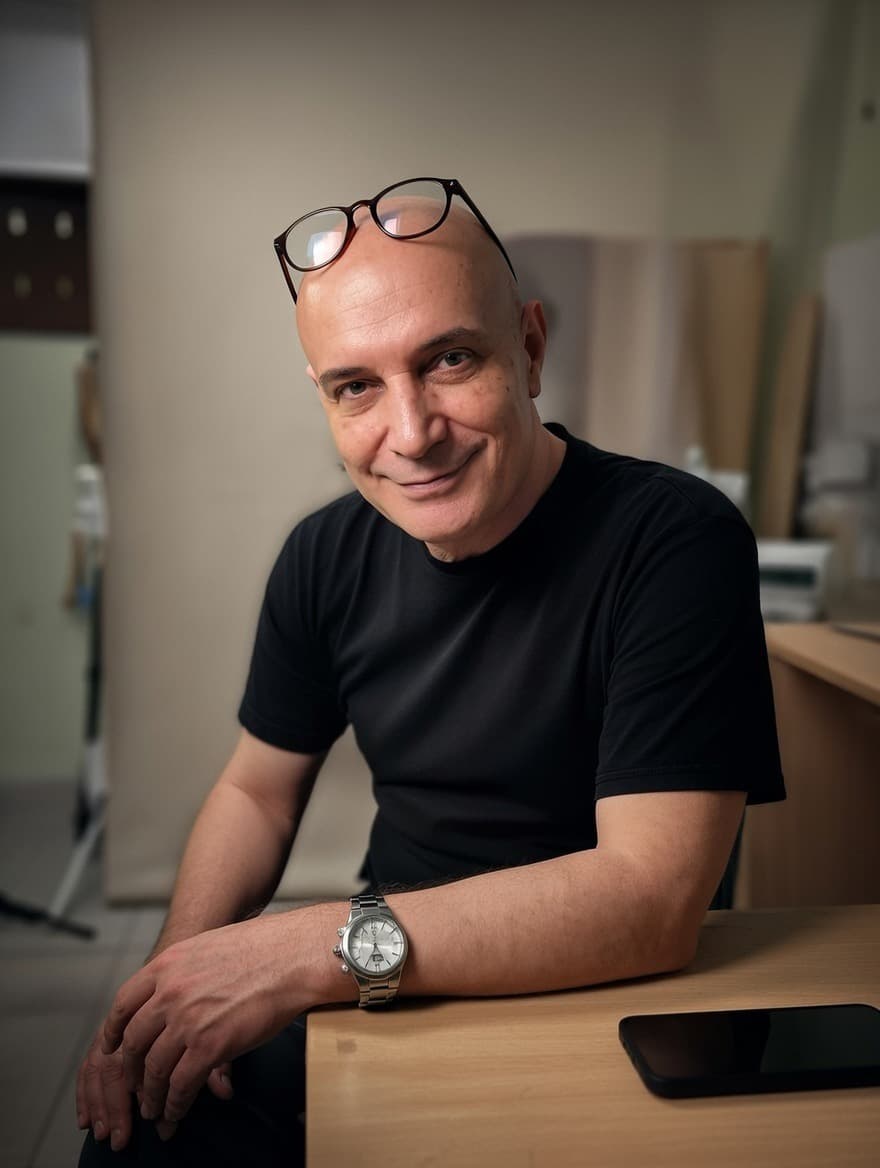
Born in 1962 in Baku, Azerbaijan, the artist showed a strong interest in fine arts from an early age. In 1978, he became a laureate of the VDNH (Exhibition of Achievements of the National Economy) in the "Young Artist" category, with his watercolor studies recognized and sent to Moscow. He enrolled in the Azim Azimzade Baku Art College in 1979, graduating in 1985, followed by the Azerbaijan State University of Arts, where he earned a degree in industrial graphics in 1990.
After graduation, he worked as an art editor at the "Işıq" publishing house and "Ceyla" magazine while developing graphic design work. In 1990, he joined the Union of Designers of the USSR. From 1995, he fully focused on independent creative work, participating in national and international exhibitions across Europe and Moscow, where his works were repeatedly noted and acquired.
Since 2008, he has been teaching at the department of graphic design at the art college affiliated with the Azerbaijan Academy of Arts. From 2018 to 2022, he taught at Western Caspian University. Since 2017, he has served as an expert on the admission commission of the State Examination Center in the field of design. He also conducts private lessons in his own studio-workshop, continuing his creative work and contribution to Azerbaijani fine art and the training of new generations of artists and designers.
Philosophy
Artist Statement
""
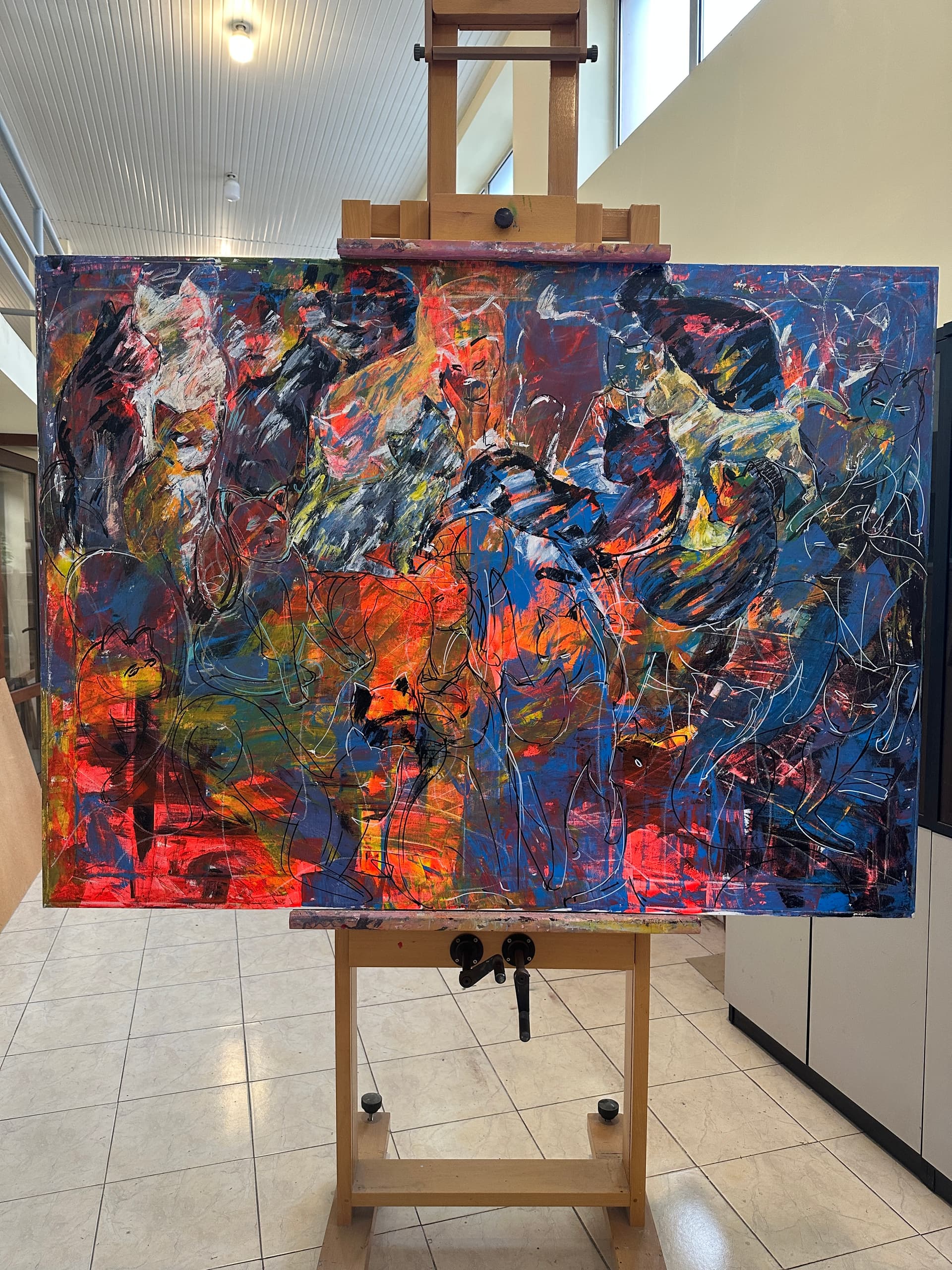
I define myself as an experimenter, constantly searching for new means of expression. My works emphasize line, plasticity of forms, and a distinctly national color palette—expressed through the traditional colors and ornaments of Azerbaijani carpets, Caspian landscapes, the sunny light of our country, and the dynamic contrast between historic Icherisheher and modern Baku.
My creative approach builds on reinterpreting classical canons through contemporary experiments. I draw inspiration from Paul Gauguin's vibrant color and primitivism, Sattar Bahlulzade's national Azerbaijani color and lyrical landscape, and Diego Velázquez's mastery of light and shadow.
A special place in my work is the influence of Azerbaijani carpet weaving. In the late 1990s, working with tapestries greatly enhanced the intensity of color in my painting. The "thread"—the fundamental element of carpet weaving—manifests in my oil and mixed techniques through special brushstrokes, textured layers, and subtle color transitions that create the effect of a woven structure, providing rhythm and giving my works volume, depth, and characteristic "shadow threads."
Eynulla
Experience
Curriculum Vitae
Education
1985-1990
Industrial Graphics
Azerbaijan State University of Arts
1979-1985
Drawing and Drafting
Azim Azimzade Baku Art College
Selected Exhibitions
1995-Present
National and International Exhibitions
Europe and Moscow
1989
30th Anniversary of Cuba's Independence Exhibition
Moscow
1988
Poster Exhibition
Poland
1978
VDNH Young Artist Exhibition (Laureate)
Moscow
Professional Experience
1995-2008
Independent Artist & Advertising Work
Freelance
1991-1995
Art Editor
Ceyla Magazine
1990-1991
Art Editor
Işıq Publishing House
1990
Member
Union of Designers of the USSR
Teaching Experience
2017-Present
Expert, Admission Commission (Design)
State Examination Center
2018-2022
Professor of Graphic Design
Western Caspian University
2008-Present
Professor of Graphic Design
Art College, Azerbaijan Academy of Arts